This guide is written for product teams, importers, wholesalers, and brand operators. Use it to structure supplier conversations and document decisions before samples or bulk production move forward.
Controlled measurement points and tolerances
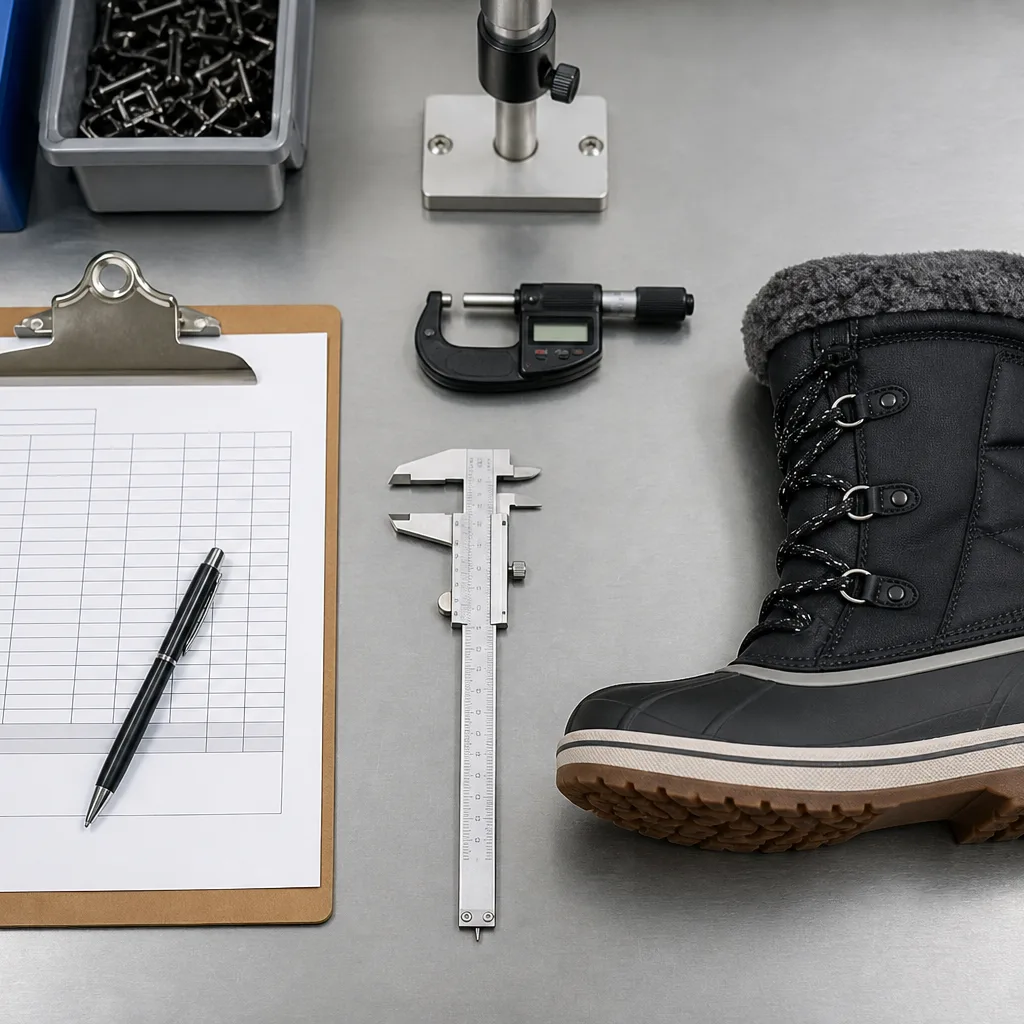
Define foot length, ball girth, instep, heel, opening, shaft, outsole, and other relevant points using diagrams and methods. Record tolerances by size where needed. Measurements create repeatability, but they do not replace on-foot review of volume, pressure, and movement.
Last and internal-volume review
Compare last shape, toe depth, ball position, instep, heel seat, and sock allowance with the target consumer. Lining, insulation, footbed, and waterproof layers all reduce internal space. Fit samples must use final or equivalent-thickness materials.
Entry, closure range, and heel hold
A snow boot must open enough for winter socks yet close securely across different feet. Review tongue movement, gusset, zipper, straps, lacing, pull tabs, shaft opening, and heel slip. Entry convenience should not be achieved by making the fit uncontrolled.
Representative size-set grading
Check more than the base size because grade rules can create excessive opening, toe volume, outsole length, or shaft change at range ends. Review at least representative small, middle, and large sizes when the program allows. Confirm molds, patterns, and measurements use the same grade logic.
Wear review with intended use conditions
Use the intended sock, footbed, activity, and duration to review toe room, flex, pressure, heel movement, warmth bulk, and closure adjustment. Record wearer measurements and sample size. Separate personal preference from repeated patterns across several suitable wearers.
Decision framework
Buyer checklist
- Approve diagrams, methods, tolerances, and measurement tools
- Evaluate internal volume with final warmth package and intended socks
- Test entry and retention across representative instep and heel profiles
- Approve representative range sizes before full production release
- Document wearer, socks, activity, duration, and observed fit pattern
Continue the specification
Move from research to a controlled brief.
Frequently asked questions
Questions buyers ask next
What should buyers prioritize first from this list?
Start with the last and internal volume, then confirm entry and heel hold. Measurement tolerances and size grading should support the approved fit rather than define it in isolation.
Does every snow boot program need all five items?
All five checks are needed for a new fit platform. Repeat programs can use historical evidence, but material, lining, footbed, or last changes should trigger targeted revalidation.