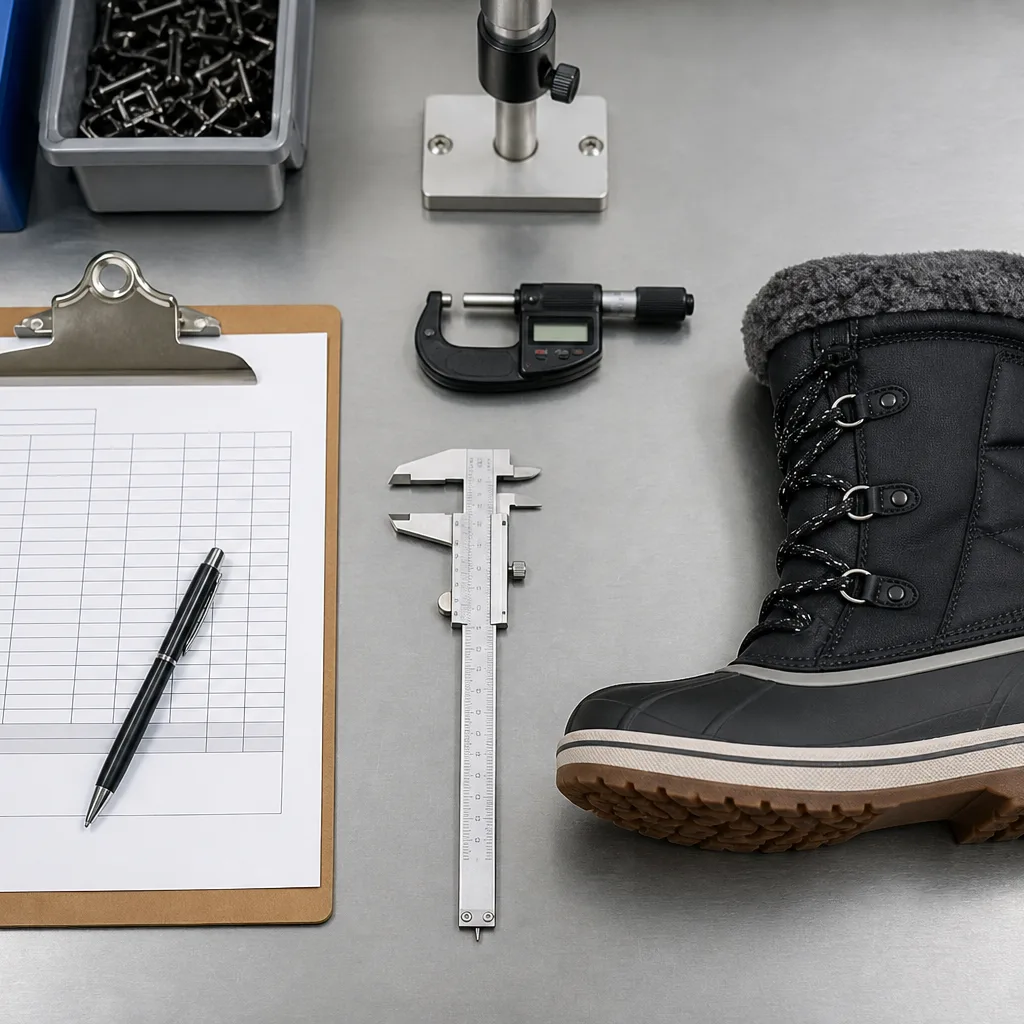
This guide is written for product teams, importers, wholesalers, and brand operators. Use it to structure supplier conversations and document decisions before samples or bulk production move forward.
Category fit and construction experience
Relevant snow boot experience reduces interpretation risk, but category fit should be specific. Ask for comparable constructions, size ranges, waterproof methods, lining types, and outsole processes. A visually similar boot is not enough if the factory has not controlled the same cold-flex, fit, or water-entry requirements.
Sampling discipline and revision control
The sample process shows whether a supplier can translate a brief into a repeatable product. Compare how measurements, substitutions, comments, and revision dates are recorded. Strong suppliers close each change against a controlled specification instead of relying on photos, chat messages, or memory.
Material traceability and substitution rules
Snow boot performance depends on the exact upper, membrane, lining, foam, adhesive, and outsole compound. Ask how material codes and approved alternatives are documented. Require written approval before substitutions because a similar color or hand feel can still change waterproofing, warmth, adhesion, or appearance.
Quality controls tied to measurable risks
A useful quality plan names the checkpoints, sample size, acceptance rule, owner, and corrective action. Compare controls for measurements, bonding, stitching, water entry, cold flex, appearance, packing, and metal detection where relevant. Generic claims about strict quality are weaker than a program-specific inspection plan.
Communication and export readiness
Seasonal footwear requires clear ownership of dates, documents, packing details, and exceptions. Evaluate response quality, not only response speed. The supplier should confirm responsibilities, surface constraints early, and prepare consistent commercial invoices, packing lists, carton marks, and shipment data for the buyer's logistics process.
Decision framework
Buyer checklist
- Confirm comparable constructions and target-market experience with sample evidence
- Review one complete sample revision trail before approval
- Record approved material codes and pre-approved alternatives
- Match each major product risk to a measurable quality checkpoint
- Test communication with a dated action list and sample export document set
Continue the specification
Move from research to a controlled brief.
Frequently asked questions
Questions buyers ask next
What should buyers prioritize first from this list?
Start with category fit and sampling evidence. A supplier that cannot reproduce the intended construction should not advance because lower pricing cannot compensate for an unsuitable process base.
Does every snow boot program need all five items?
Use all five as a weighted scorecard, but change the weights by program. A new custom outsole may increase tooling and development weight, while a repeat private label program may place more weight on consistency and delivery control.