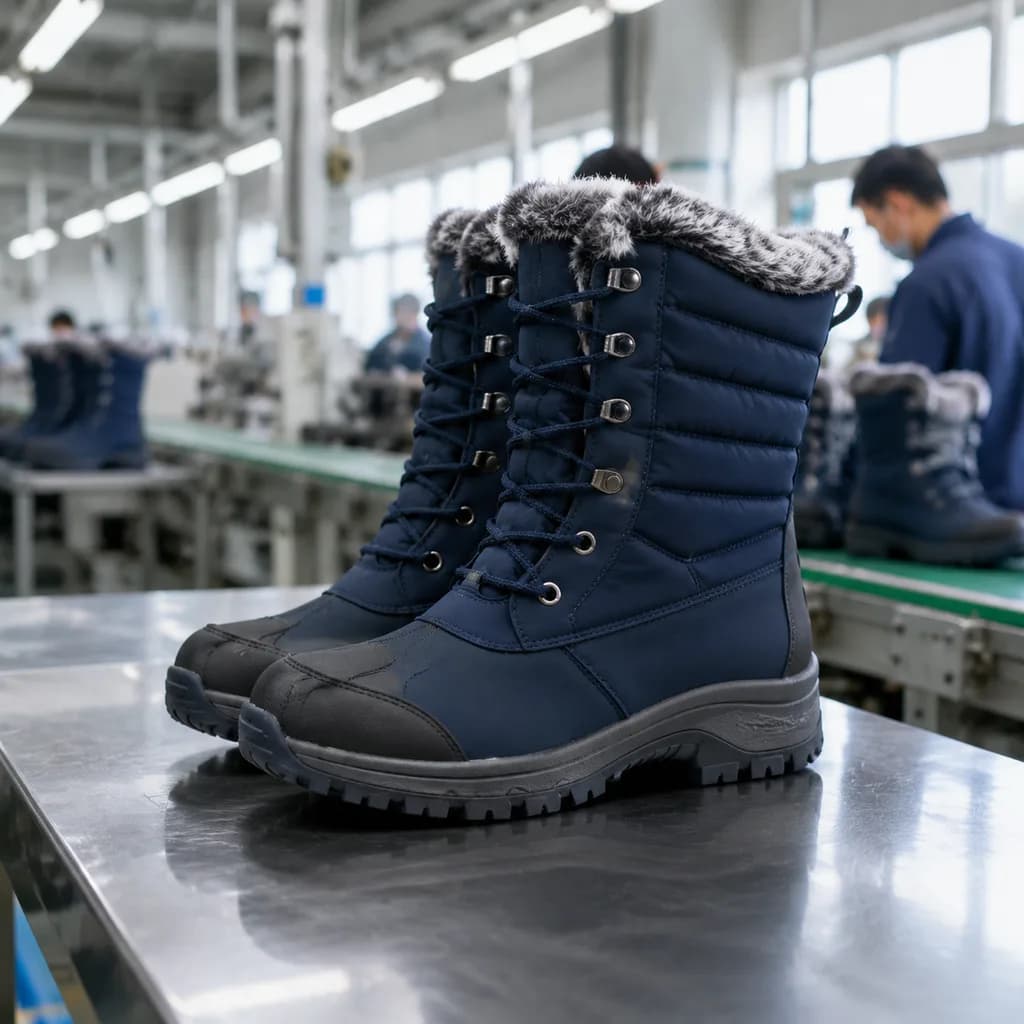
Prepare a custom snow boot RFQ by recording fixed requirements, directional references, and open questions in a practical decision register.
A buyer may have enough information to begin a custom snow boot inquiry without having every product and commercial decision finalized. The challenge is to show which parts of the definition are firm, which references communicate direction, and which subjects still need discussion.
For the buyer, our editorial recommendation is to prepare a decision register before submitting a custom snow boot RFQ. Assign each entry one of three statuses: fixed, reference-based, or open. The resulting document is a record of the product definition at its current stage, not a claim that unresolved points have already been approved.
This method can be applied to the subjects supported by SnowBootWorks' published information. Its manufacturing capabilities page describes custom snow boots developed to the buyer's specification and names construction, materials, and approval standards as factors driving decisions. The register gives the buyer a clear place to record the status of each factor.
Start with the inquiry package
Before expanding the technical detail, define what the inquiry package needs to communicate. We recommend including the intended product direction, the current decision register, clearly identified references, and a short list of questions. Each document or sample should have a stated purpose.
A concise package could contain:
- A summary of the intended snow boot direction
- Fixed requirements and the documents that control them
- References annotated with the attributes they are meant to communicate
- Open product, development, sampling, and quotation questions
- The current status of construction, materials, sizing, fit, and buyer-defined approval requirements
Items should remain open when they have not been confirmed. That status is more precise than filling a gap with a provisional requirement that could later be mistaken for a binding instruction.
Define the three statuses
The register can sit inside the snow boot specification brief or accompany it as a separate table. Use one row per decision so that construction, fit, material direction, and approval requirements do not become a single combined instruction.
| Status | Buyer-side meaning | Recommended entry |
|---|---|---|
| Fixed | The buyer currently intends to preserve the requirement. | State the requirement and identify its controlling document or approved reference, where one exists. |
| Reference-based | A sample, product, image, or description communicates selected direction. | Name the relevant attributes and state which parts of the reference are outside the requirement. |
| Open | The buyer has not confirmed the decision or needs project-specific information. | Write a direct question and note any known constraint that affects it. |
The status belongs to the individual decision, not to the product as a whole. A reference may be fixed for one attribute and directional for another. Recording those entries separately helps prevent a visual reference from becoming an unintended fit, construction, or material requirement.
Separate sizing from fit
SnowBootWorks' product catalog tells buyers considering its listed women's snow boot platforms to decide the target sizing system and fit reference first. The catalog describes those platforms as spanning clean urban, quilted, and plush cold-weather directions. This published guidance is specific to those women's platforms.
We recommend giving sizing and fit separate rows in the register:
- Target sizing system
Record the intended system and mark it fixed only after the buyer has confirmed it.
- Fit reference
Identify the product, sample, or document intended to communicate fit direction. Specify which characteristics of that reference matter.
- Open fit inputs
List the measurements, reference information, or approval questions that still need to be discussed for the project.
This structure allows the buyer to confirm a sizing system while leaving the fit reference open, or to provide a fit reference while the sizing decision remains under review. It should not be read as evidence of a universal SnowBootWorks fit-development or size-grading service.
Record construction and approval requirements independently
Construction and approval standards are separate decision factors in SnowBootWorks' description of development to a buyer's specification. A buyer's register should preserve that separation.
- State the construction position. If it is fixed, identify the controlling requirement. If a reference only indicates construction direction, name the relevant feature. If the position is open, ask what information is needed to evaluate it.
- Define the approval requirement. Record the buyer's applicable acceptance criteria, decision authority, and controlling documents to the extent already known.
- Isolate unresolved approval topics. Put questions about testing, documentation, compliance, or review criteria in open rows until the parties confirm what applies.
The supplied sources do not name certifications, regulations, laboratories, test methods, audits, or inspection standards. Those details therefore need to come from the buyer's requirements or remain explicit inquiry questions. They should not be inferred from the general reference to approval standards.
Keep upper materials apart from boot performance
The SnowBootWorks materials page lists three directions under its waterproof textile upper category: coated nylon upper, water-resistant fabric upper, and technical textile shell.
The same material entry also describes a woven or laminated synthetic fabric upper, typically nylon or polyester, with a durable water-repellent coating and often a waterproof membrane or laminate backing. It presents this as a lightweight, flexible direction for everyday snow boots intended to stay supple in the cold.
Those descriptions support entries about upper-material direction. They do not provide a finished-boot waterproof rating, temperature rating, durability result, bonding result, or other completed-product result. We recommend separating the two types of entry:
| Upper direction | Finished-product requirement |
|---|---|
| Record which documented textile direction is relevant to the buyer's brief. | Record the buyer's required performance definition separately, if one has been established. |
| Identify whether fabric type, fiber direction, DWR finishing, membrane, or laminate backing is material to the brief. | Leave methods, thresholds, evidence, and review responsibilities open until they are defined for the project. |
A material term should not carry an unstated finished-product requirement. When performance matters, the buyer should define it in its own row and ask what information is needed to evaluate the requirement.
Annotate every reference
SnowBootWorks documents one private-label waterproof winter boot program in which a brand brief moved from reference samples to an export-ready branded production run. That source describes one program; it does not establish a standard sequence for every inquiry.
For a new private label snow boots inquiry, we recommend adding a short note to each reference. The note should identify the attribute the buyer wants to communicate, such as silhouette, shaft proportion, upper character, fit direction, construction direction, or branding position. Attributes that should not be copied can be named in the same entry.
Do not ask the reference to carry the whole specification. A labeled reference communicates selected direction; the register records whether each selected attribute is fixed, reference-based, or open.
Write open items as questions
Open rows should lead to answerable inquiry questions. The following are buyer-side prompts, not statements about documented SnowBootWorks services or project outcomes:
- Development: Which development options may apply to the current definition, and what additional inputs are needed to assess them?
- Sampling: Which sampling options may apply, and what would each proposed sample be intended to review?
- Quotation: Which specifications and commercial assumptions need confirmation before quotation options can be discussed?
- Quantities: What quantity information should be provided, and what quantity conditions may apply to this direction?
- Timing: Which timing questions can be addressed after the product scope and applicable options are confirmed?
- Testing and compliance: Which buyer-defined markets, requirements, methods, documents, and approval criteria need to be supplied?
- Packing and logistics: Which destination, labeling, packing, and shipment details are relevant to determining available options?
No sample type, testing program, compliance review, lead time, minimum order, packing arrangement, or logistics service is established by the supplied excerpts. The inquiry should ask what may apply instead of presenting any of those topics as confirmed.
Submit the current definition
Review the register before submission. Confirm that each fixed requirement has a clear statement, each reference has an assigned purpose, and each unresolved point appears as a question. Check separately for the target sizing system, fit reference, construction direction, material direction, and applicable buyer-defined approval standards.
The finished inquiry package should represent the product as currently understood. Share it through the project inquiry page and ask which development, sampling, or quotation options may apply to the project.
Evidence layer
Evidence checklist: Custom Snow Boot RFQ: A Three-Status Decision Register
A supplier comparison becomes useful when each candidate answers the same questions in the same format. Record the closest existing construction, what must change for your brief, which sample revisions are included, and how the approved reference will be carried into production. Keep commercial promises separate from evidence: a polished catalog image is not proof of repeatability, and a low opening price is not proof of landed cost. For this guide, map each supplier response to “Start with the inquiry package” so a claim is supported by a written specification, sample reference, controlled document, or a clearly marked open question.
Ask for a written development summary, a sample revision log, the proposed inspection checkpoints, and the export documents your importer will need. If an answer is conditional, write down the condition rather than converting it into a guarantee. Cross-check the response against “Define the three statuses” and keep every unresolved point visible in the approval record.
- Program fit and closest base style — scoped to custom snow boot RFQ
- Sample notes, measurements, and revision ownership — cross-checked against “Start with the inquiry package”
- Production, inspection, and corrective-action evidence — with open risks from “Define the three statuses” recorded
Decision framework
Buyer checklist
- Use fixed, reference-based, and open statuses to describe the current maturity of each product decision.
- Keep target sizing system and fit reference in separate register entries.
- Record construction, materials, and buyer-defined approval requirements independently.
- Treat upper-material direction separately from finished-product performance requirements.
- Annotate references with the exact attributes they are intended to communicate.
- Present development, sampling, quotation, testing, timing, quantity, compliance, packing, and logistics matters as inquiry questions.
Sources and verification
Evidence used for this guide.
Continue the specification