This guide is written for product teams, importers, wholesalers, and brand operators. Use it to structure supplier conversations and document decisions before samples or bulk production move forward.
Right-size the retail box first
Tall shafts, thick linings, and bulky outsoles can create unnecessary retail-box volume if the boot orientation is not tested. Pack the actual size range with proper stuffing and shape control. Avoid over-compression that creases materials or changes faux-fur presentation.
Standardize pair orientation and assortment
Define left-right orientation, nesting, tissue, stuffing, silica or moisture controls where appropriate, and size-color assortment per carton. Use diagrams for mixed assortments. Consistent packing reduces box damage, counting errors, and warehouse confusion during final inspection and receipt.
Control carton dimensions and weight
Record production-packed external dimensions, gross weight, net weight, and pair count by carton type. Compare with carrier, warehouse, and manual-handling limits. Small dimensional changes can affect freight cube across a seasonal shipment, so do not rely only on development estimates.
Use clear, consistent carton marks and labels
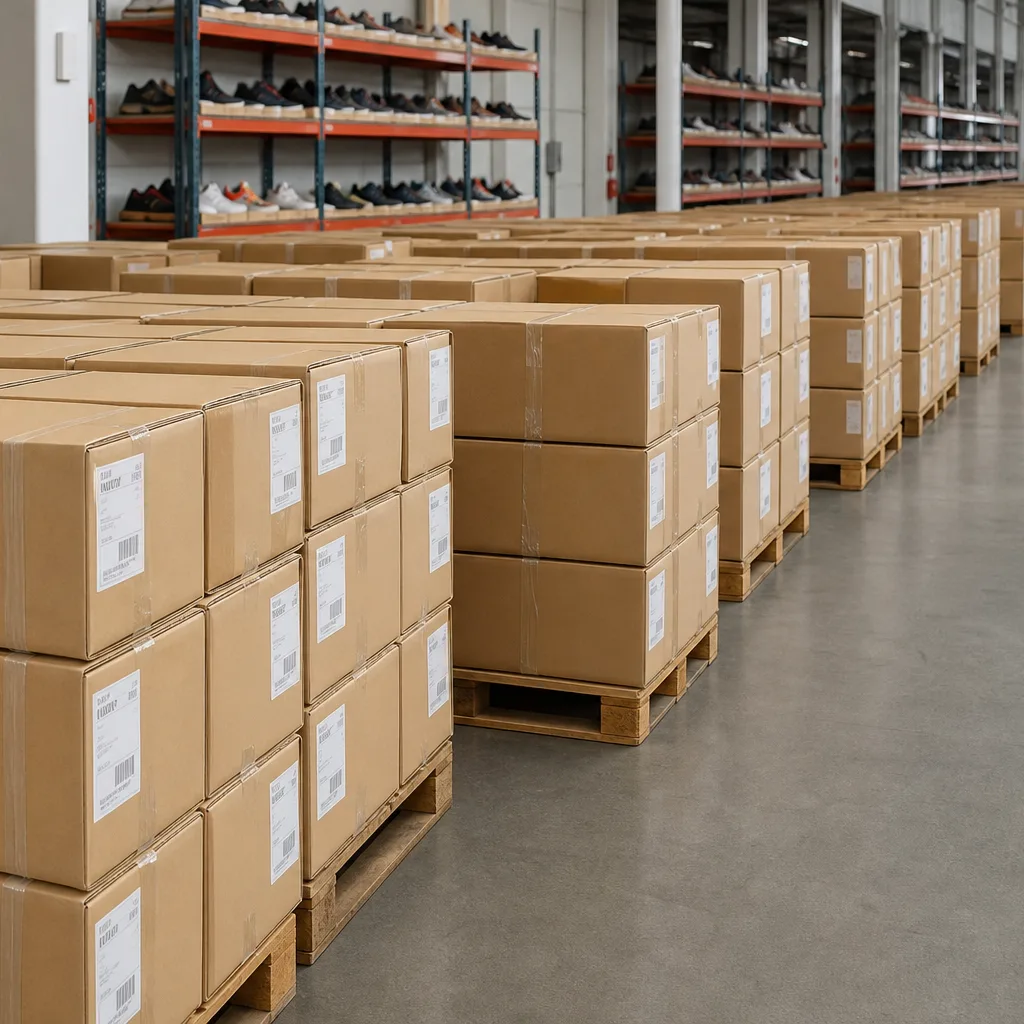
Carton marks may include buyer, purchase order, style, color, size assortment, carton number, quantity, destination, handling, barcode, and origin details. Requirements vary by buyer and market. Keep marks consistent with the packing list and avoid applying conflicting old labels.
Validate stacking, moisture, and handling protection
Review board strength, tape or closure, edge crush, compression, pallet pattern where used, container conditions, and expected storage. Test the packed system where risk justifies it. Boots should arrive without crushed boxes, transferred color, mold risk, or collapsed shafts.
Decision framework
Buyer checklist
- Approve packed retail-box dimensions using representative sizes
- Create a visual packing standard for pair and carton assortment
- Measure final packed cartons and reconcile freight data before booking
- Pre-approve carton artwork and compare every field with shipment data
- Assess packed-carton compression, closure, moisture, stacking, and handling
Continue the specification
Move from research to a controlled brief.
Frequently asked questions
Questions buyers ask next
What should buyers prioritize first from this list?
Right-size the retail pack and master carton together because product protection and freight efficiency depend on both. Final dimensions and weight should be confirmed before transport booking.
Does every snow boot program need all five items?
All five practices belong in a repeatable packing specification. Adjust carton count and structure by boot size where needed instead of forcing every style into one inefficient carton.