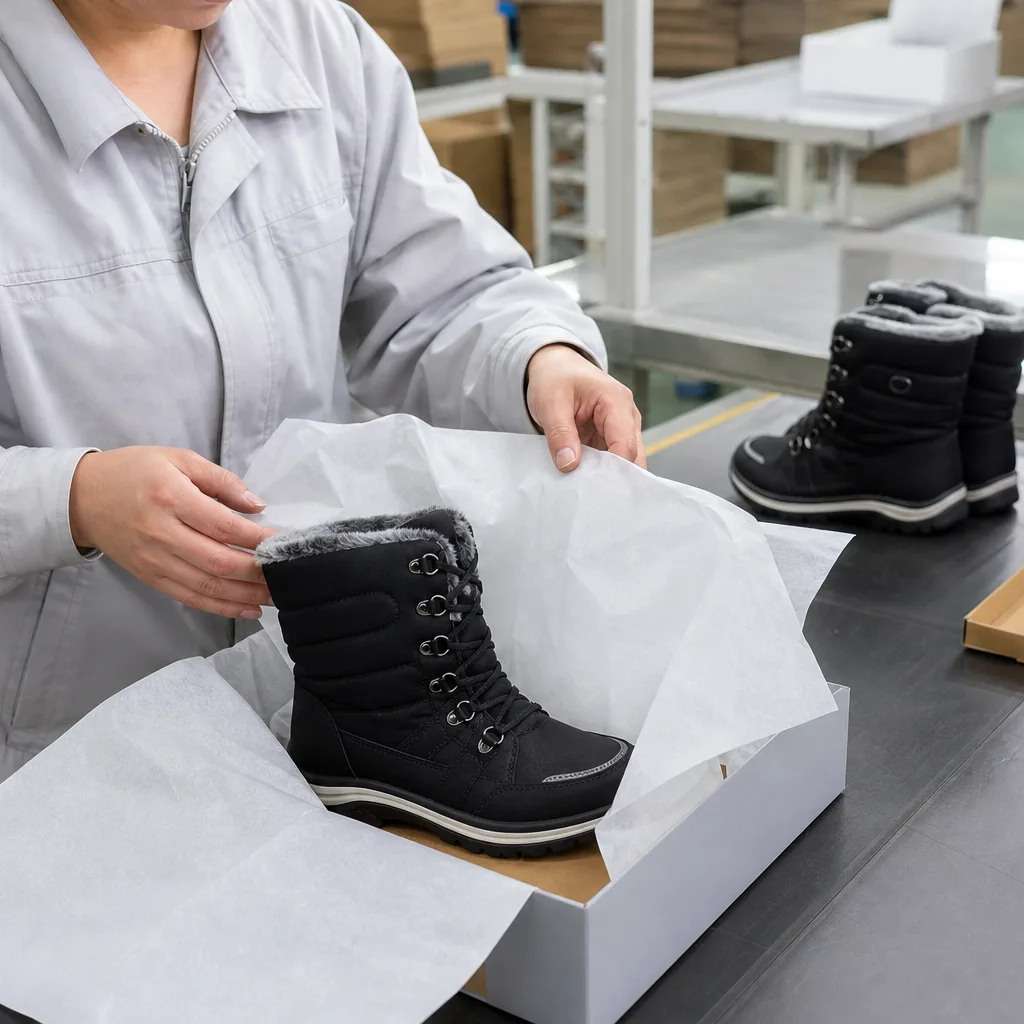
This guide is written for product teams, importers, wholesalers, and brand operators. Use it to structure supplier conversations and document decisions before samples or bulk production move forward.
Fully custom printed shoe box
A custom printed box provides the strongest control over color, graphics, product story, and retail presentation. It can also introduce print minimums, plate or setup costs, shade variation, and longer approval time. Right-size the structure around the actual boot orientation before final artwork.
Standard box with branded sleeve or label
A standard structural box can reduce setup and material complexity while a sleeve, large label, or wrap carries the brand. This approach supports smaller programs and shared packaging across styles. Confirm that identifiers remain visible and that the added component does not interfere with stacking or scanning.
Kraft or reduced-ink packaging system
Kraft board and restrained print can support a simple, outdoor, or lower-ink visual direction. Material choice should still meet compression, scuff, moisture, and color-transfer needs. Avoid broad sustainability claims without verified material and disposal information for the target market.
Protective bag or reusable textile pack
A bag can reduce box volume or create a reusable presentation in selected channels, but it may provide less crush protection and complicate stacking or labeling. Review material, closures, ventilation, warning requirements, barcode placement, and how the boot shape is maintained during transit.
Retail-ready or display-oriented pack
Retail-ready trays, open-front boxes, handles, or shelf-display structures can reduce store handling and increase visibility. They must survive export cartons and warehouse movement without exposing the boot to damage or dust. Prototype the complete retail and master-carton system together.
Decision framework
Buyer checklist
- Approve structure, dimensions, board, print proof, marks, and packed sample
- Separate standard protection from lower-minimum branded presentation
- Verify board performance and substantiate every environmental claim
- Validate protection, labeling, closure, ventilation, and warehouse handling
- Test retail display, master-carton protection, handling, and scan access
Continue the specification
Move from research to a controlled brief.
Frequently asked questions
Questions buyers ask next
What should buyers prioritize first from this list?
Begin with protection and channel handling, then layer brand presentation. A visually distinctive pack that deforms the boot or wastes carton space creates cost and return risk.
Does every snow boot program need all five items?
Brands can combine a standard protective structure with custom labels, tissue, inserts, or sleeves. Keep the packaging hierarchy simple and ensure every component has a protection, identification, or brand purpose.